


Ready Ready’s Literacy Coordinator Megan LeFaivre shared science-based tips about the Basic Guilford’s Maximize Love, Manage Stress for Valentine’s Day. She was interviewed on Fox 8 WGHP.
The Basics Guilford are five easy, science-based concepts born at Harvard that any adult can do to boost baby and toddler brain growth. Science shows us that 80 percent of brain growth happens up to age three, so these are critical years. Infants and toddlers thrive when their world seems loving, safe, and predictable. When we as parents or caregivers express love and respond to their needs, children learn they can count on their grownups.
How do we maximize love and manage stress for babies?
· Showing and responding to love helps children learn to manage their feelings and behavior.
· For infants, it’s as simple as holding them. Hold, kiss, and cuddle your infant – there is no worry about spoiling them or holding back on sharing your love.
· Respond to them: Your infant depends on you to meet their needs. Watch and listen for clues about how they feel and what they need, and respond to what you notice. It helps them learn that you care.
· For toddlers – cuddle them! Hugging and cuddling your toddler helps them feel safe and loved – boys need just as much love as girls do.
· Talk about feelings – teaching your toddler to name their feelings can help them understand and express their emotions. You can say things like “It looks like you’re scared because you fell. Falling can be scary! But now you’re OK” Naming the emotions is important. These are just a few of the tips we offer through the Basics Guilford.
We’ve talked about maximizing love – what about managing stress? Why is that important?
· We all face stress. It’s normal. But too much stress is bad for a baby or toddler’s developing brain and has a lifelong impact.
· Some things that cause stress for infants are loud noises, adults who seem angry or upset, or adults who don’t respond to their needs.
· It’s important to have strategies for coping when your life gets stressful – talk to friends, family, or your doctor about ways to deal with stress.
· If you can think about situations that tend to be stressful, you can plan ahead of time for how to improve or avoid them. For example, try to avoid trips to the store right before your child’s nap time.
· Go easy on yourself – life can feel overwhelming, and we all make mistakes. Focus on the big picture and ask for help. All parents need help.
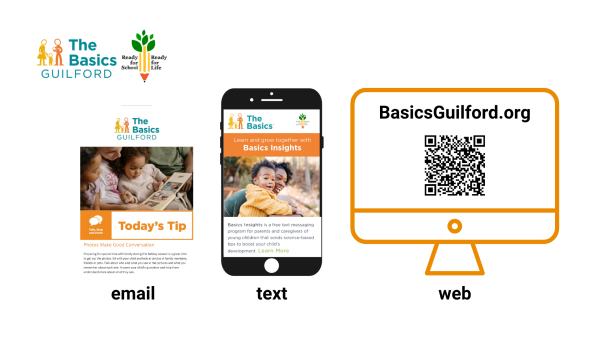
You can learn more about The Basics Guilford including how to receive weekly emails or no-cost twice weekly text messages by clicking on the image below or scanning the QR code with your smartphone.

 McCracken said the startup energy she enjoys at work reminds her of a giant puzzle and making all the pieces fit. That may be one of the reasons she’s turned to detective stories in her spare time.

 Thriving at Three works with about 40 families each year, assessing their children’s developmental status with the Ages & Stages Questionnaire. Some parents receive the

 “I love monograms and football with the same amount of passion and fervor,” Walker shared. “I love watching Carolina football – that’s University of National Champions, by the way. I’m also a Carolina Panthers fan, which has been a hard road for the past couple of years. I watch football at our house from Thursday to Monday with my husband and daughters. It’s an institution.”









 While her work at Ready Ready runs the gamut from monthly newsletters, to website updates, social media, media relations, public will-building, and more, Skordas says she values the principles Ready Ready weaves through all its work. “The focus on being family-led, inclusive, equity-driven, responsive to evidence, transparent, and collaborative is critical to the system-building work we’re doing,” she said. “As a former journalist, I feel so strongly about how communities that are aware and informed can make amazing strides together.”